When you first contact Early Childhood Intervention (ECI) services, you might expect a therapist working directly with your child while you observe from nearby—perhaps taking notes, watching carefully, learning by observation.
Then your first session arrives, and something feels different. The therapist asks you questions. Lots of questions. They watch you interact with your child. They guide you to try strategies yourself. You might wonder: Shouldn’t the expert be doing this?
Early Childhood Intervention programs nationwide have embraced coaching as best practice in service delivery, but many parents don’t fully understand what this means or why it’s particularly effective for their child’s development.
In this post, we’re explaining exactly what coaching looks like, why research supports this approach, and how you become your child’s most powerful teacher.
What Research Tells Us About How Young Children Learn
The coaching model isn’t just a service preference—it’s grounded in decades of research about early childhood development.
Studies consistently show that infants and toddlers learn best in familiar settings with familiar people. Your child spends the vast majority of their time with you, not with therapists. You know your child’s temperament, preferences, routines, and rhythms better than anyone else.
Research also demonstrates that children learn most effectively through real-life experiences, rather than isolated practice sessions. When intervention occurs during mealtimes, playtime, and bath time—the contexts where your child will use these skills every day—the learning transfers naturally.
Perhaps most importantly, coaching is built on adult learning principles. You’re not expected to become a therapist. You’re learning specific strategies tailored to your child and your family’s routines, understanding the “why” behind each approach so you can adapt them as your child grows.
The Numbers That Show Why This Matters
Let’s look at how these research principles translate into real-world impact.
Consider a clinic-based model where a child receives direct services three times weekly for 30-minute sessions. That’s 90 minutes total each week. During those sessions, the child might practice a new skill—let’s say rolling from back to belly—approximately three times per visit.
Clinic-based model:
- 3 practices per session × 3 sessions per week = 9 practices weekly
- 9 practices × 4 weeks = 36 practices per month
Now consider the coaching approach. During your ECI session, the specialist teaches you a strategy: after every diaper change, help your baby practice rolling from back to belly. If your child has eight diaper changes daily, they’re now practicing this skill eight times every single day.
Coaching approach:
- 8 practices per day × 7 days = 56 practices weekly
- 56 practices × 4 weeks = 224 practices per month
Your child just went from 36 opportunities to 224 opportunities—and that’s just one strategy embedded into one daily routine. When you multiply this across multiple routines throughout the day, the learning opportunities become exponential.
This is the coaching difference: development happens in the moments that matter most—the everyday interactions that make up your family’s life.
Inside a Coaching Session: What Actually Happens
If you’re new to ECI services, understanding what happens during a coaching session can help set realistic expectations. Coaching sessions follow five interconnected components that flow like a conversation rather than a checklist:
Joint Planning (Beginning): Your session starts with you and your specialist discussing what’s been working since your last visit, what challenges you’ve encountered, and what you’d like to focus on today. This is collaborative planning based on your family’s priorities.
Observation: Your specialist watches you and your child engage in a typical activity or routine, observing what’s already working well and where they might suggest adjustments.
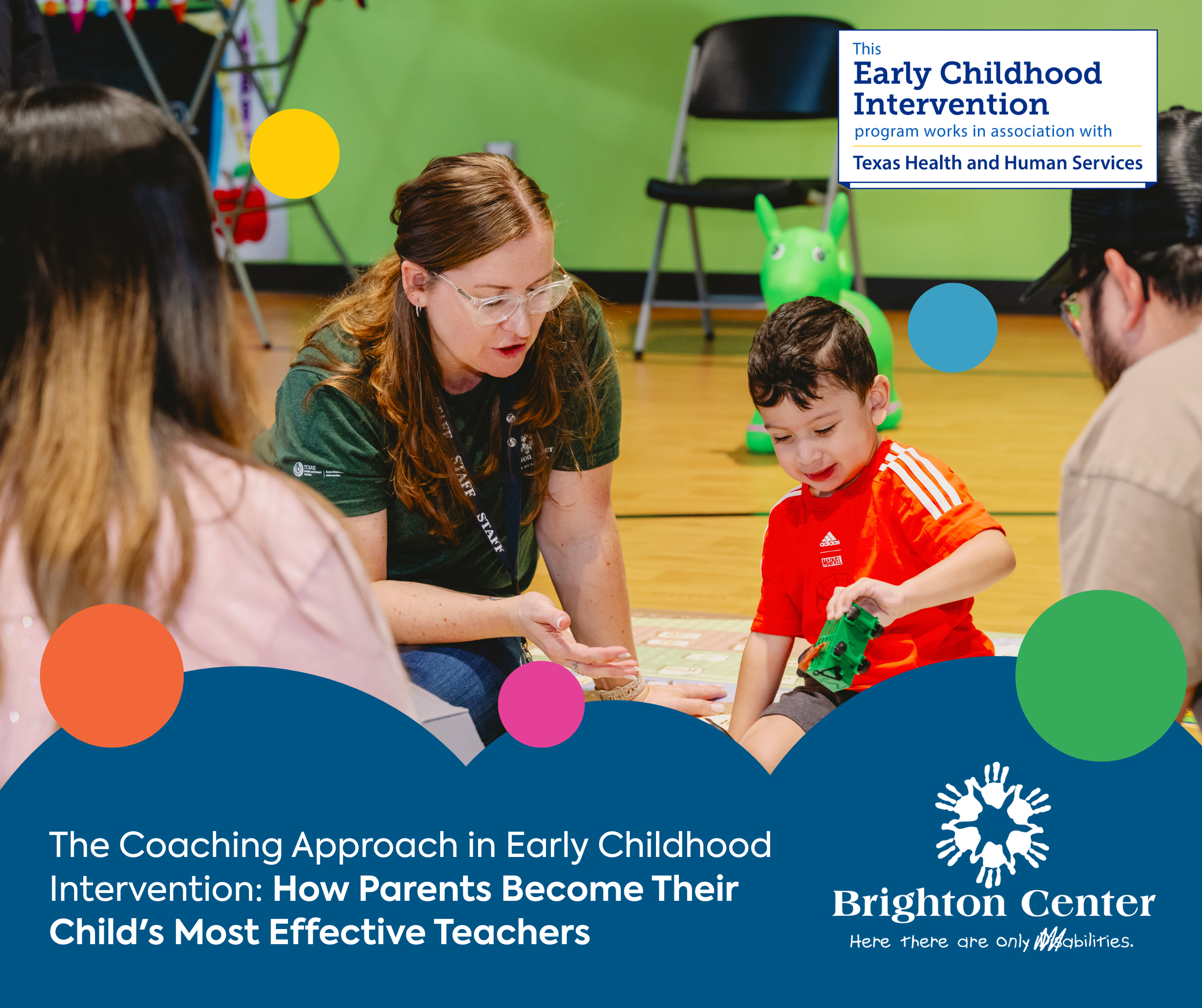
Action and Practice: Your specialist might demonstrate a strategy, then guide you as you try it yourself. They’re identifying specific techniques that could support your child’s development within your family’s natural routines.
Feedback: You receive immediate, specific feedback about what’s working. Equally important, you provide feedback: “Yes, that felt natural” or “I don’t think that will work during our morning rush.” This ensures strategies actually fit your life.
Reflection: Through thoughtful questions, your specialist helps you discover insights on your own. Instead of telling you what to do, they might ask, “What do you think made that work so well?” This reflection builds your confidence and problem-solving skills.
Joint Planning (Ending): Your session closes with a clear plan: what you’ll practice between now and next time, how it fits into your routines, and what you’ll focus on during your next visit together.
These components create a dynamic conversation focused on building your capabilities to support your child throughout every day.
The Questions Parents Ask (And Honest Answers)
Based on years of working with families, certain questions come up repeatedly when parents are new to the coaching approach:
“My pediatrician recommended therapy two to three times weekly. Why am I only receiving services twice monthly?”
The coaching model focuses on intensity rather than frequency. With coaching, intervention happens constantly throughout your week, not just during scheduled visits. The strategies you implement daily provide far more learning opportunities than additional appointments could offer.
“Why are you asking me so many questions?”
Specialists don’t observe your child 24 hours a day, so questions help them understand the complete picture. Often, these questions also guide you toward insights. When a specialist asks, “Do you always pick up your baby from their back?” you might realize, “Oh—they never get the opportunity to practice rolling.”
“Why isn’t the therapist interacting more with my child?”
The goal is building your capacity to support your child’s development in all settings, not creating dependence on specialist visits. You’re learning to recognize opportunities and implement strategies independently, which benefits your child far beyond scheduled sessions.
“Am I expected to become a therapist?”
Absolutely not. Evidence-based practice rests on three pillars: the therapist’s education and experience, current research, and individualized application to each child and family. You’re only working within that third pillar—learning what works specifically for your child.
Your specialist brings years of education, current research, and experience working with hundreds of children with diverse developmental needs. You get deep, intimate knowledge of your unique child—their personality, preferences, what motivates them, and when they’re most receptive to trying new things.
Think of it this way: if specialists only worked directly with your child during scheduled sessions, their expertise touches your child for maybe three hours monthly. Through coaching, their expertise influences your child’s development in countless moments each day. You’re not replacing their job—you’re exponentially extending their reach.
What ‘Understanding the Why’ Really Means
One element of coaching that parents find particularly valuable is learning the reasoning behind strategies—what specialists call caregiver education.
When you understand why a strategy works, you can adapt it across different situations. If your specialist explains that your child needs practice with weight-bearing on their arms to build strength for crawling, you suddenly see opportunities everywhere: during tummy time, propped up during diaper changes, even held against your chest while you’re standing.
Without understanding the “why,” you might only use the exact strategy in the precise situation where it was taught. With that knowledge, you become creative, spotting natural moments throughout your day to support your child’s development.
What Empowered Parents Look Like
When coaching is working effectively, parents demonstrate specific characteristics. Empowered parents notice the progress their child is making and celebrate those wins. They can identify what’s going well and what isn’t and reach out proactively for support when needed.
During sessions, empowered parents feel comfortable asking questions and demonstrating what they’ve learned. They’re confident enough to say, “I don’t think that strategy will work for our family because…” and collaborate on finding alternatives.
They understand their child’s development well enough to spot opportunities for growth during everyday activities. Most importantly, they trust their own instincts about what their child needs.
This confidence doesn’t appear overnight—it builds through consistent coaching sessions where specialists support rather than direct, guide rather than tell, and respect parents’ expertise about their own children.
Beyond Individual Sessions: Shared Goals and Collaborative Planning
One advantage of Brighton Center’s ECI program is that all specialists—whether Speech-Language Pathologists, Occupational Therapists, Physical Therapists, or Early Intervention Specialists—work from a single, unified plan created in partnership with you.
Goals are written for real routines in your day. When you express a priority like, “I want my child to be calmer during meals,” specialists ask, “What does calm look like to you?” The answer might be: “I want my child to sit in their highchair for five minutes and try one new food.”
Now, everyone working with your child understands exactly what you’re working toward and why it matters to your family. This collaborative approach means you’re not receiving conflicting advice or working on disconnected goals.
The Approach That Changes Outcomes
The coaching approach represents more than a service delivery method—it’s a fundamental belief that, when provided with information, strategies, and support, parents are extraordinarily capable of supporting their child’s development.
Research supports it. The numbers prove it. Experience confirms it.
The Early Childhood Intervention emphasis on coaching ensures that intervention doesn’t just happen during scheduled appointments—it occurs during morning routines and mealtimes, during play and bath time, during all the ordinary moments that make up your child’s days.
This is how children make remarkable progress during those critical early years, through consistent, meaningful practice within the familiar routines and relationships that shape their world.
When you understand the coaching approach—what it is, why it works, and what your role entails—you can embrace it fully, knowing you’re not being asked to do something beyond your capabilities. You’re being invited to use your unique knowledge of your child to multiply the impact of professional expertise.
Because ultimately, no one knows your child better than you do. And with the right support, information, and coaching, you’re capable of extraordinary things.
Ready to learn more about Brighton Center’s Early Childhood Intervention program? Our specialists use a coaching approach to empower families with strategies that work within your daily routines. Contact us via our form or call us at 210-826-4492 to discuss how we can support your family.